
San Diego Bicycle Accident Statistics & High-Risk Areas

Frequency of Bicycle Accidents in San Diego
San Diego County sees hundreds of bicycle accidents each year, making bicycle accident statistics an important resource for riders and drivers alike. Based on California Highway Patrol’s Statewide Integrated Traffic Records System (SWITRS), which tracks vehicle, bicycle, and pedestrian collisions, more than 700 bicycle accidents occur annually in San Diego County.
Here are some key statistics (2018–2025):
5,582 Bicycle Crashes
Since 2018, there have been 5,582 reported bicycle crashes in San Diego County.
5,871 Injuries
Around 90% of bicycle crashes result in injuries, with severe injuries making up about 10% of these cases. Common injuries range from road rash and broken bones to traumatic brain injuries and spinal cord damage.
71 Fatalities
Approximately 1% of bicycle crashes are fatal. Since 2018, there have been 71 bike crash deaths in San Diego County.
700+ Crashes Annually
San Diego County averages over 700 bicycle crashes annually.
When Crashes Occur
Crashes peak during the afternoon between 12 p.m. and 6 p.m., with Wednesdays and Thursdays registering the highest counts.
Source: Transportation Injury Mapping System
Bike Crash Types
Broadside Crashes
Broadside collisions make up 34% of all bike crashes. A broadside collision, or “T-bone” collision, occurs when the front of a car strikes the side of a bicycle. This usually happens at intersections or where cars are turning. Broadside collisions are often caused by drivers failing to yield to cyclists, not seeing them in their blind spots, or misjudging the cyclist’s speed or direction.
Sideswipe Crashes
Sideswipes make up 13% of bike accidents. A sideswipe collision occurs when a vehicle passes too closely to a cyclist and hits them along the side. Unlike a broadside collision that hits the side of the bicycle head-on, a sideswipe involves the vehicle moving parallel to the bicycle. This type of collision can occur when vehicles attempt to pass cyclists too closely.
Rear-end Crashes
Rear-end collisions make up 8% of bike accidents. Rear-end collisions happen when drivers don’t see a cyclist and hit them from behind. Rear-end collisions are more likely when there is a disparity between the speeds of fast traveling vehicles and slower bikes.
Other Crashes
Other common bike crash types include head-on, hit objects, potholes, and more.
Source: Transportation Injury Mapping System
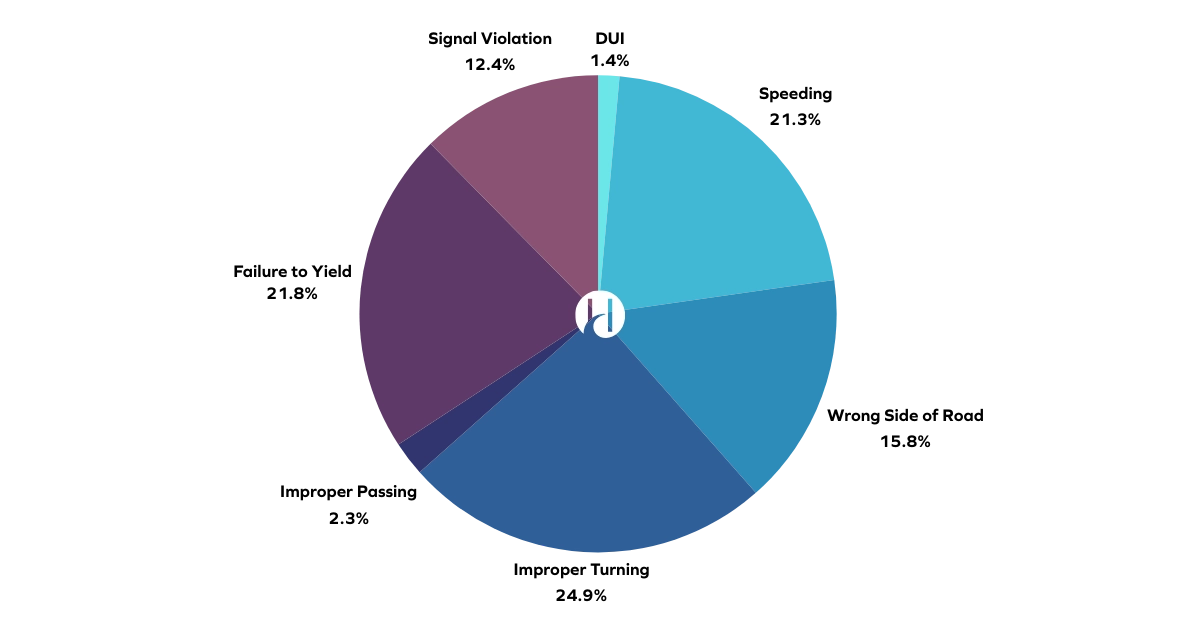
Leading Causes of Bicycle Accidents
Distracted Driving
Distracted driving is a top cause of bicycle accidents in San Diego, often due to motorists using mobile devices, eating, or otherwise not paying full attention.
Failure to Yield
Many accidents occur when drivers fail to yield the right of way to cyclists, especially when making turns at intersections or attempting to turn in front of a cyclist.
Dooring Incidents
Dooring accidents happen when a car door opens suddenly into a cyclist’s path, causing a collision. Cyclists often have limited space to maneuver in congested urban areas, which increases this risk.
Alcohol-Related Incidents
Impaired driving is a factor in a significant number of bicycle accidents.
Hazardous Road Conditions
Potholes, debris, inadequate facilities, and road construction can all contribute to accidents. For a deeper look at how dangerous road conditions cause bicycle crashes in San Diego, see our dedicated guide.
Source: Transportation Injury Mapping System
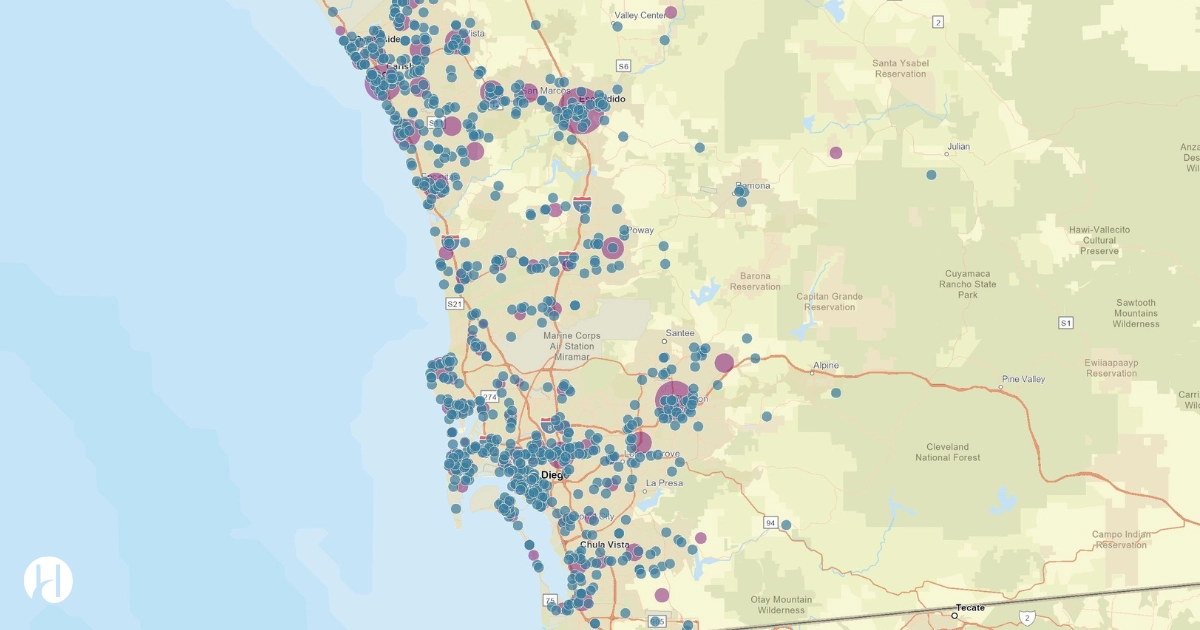
The Most Dangerous Areas for Cyclists in San Diego
Downtown San Diego
Busy urban areas, particularly downtown, consistently report higher numbers of bicycle accidents. The dense traffic and frequent stop-and-go conditions can make the downtown area challenging for drivers and cyclists, especially near intersections.
Coastal Areas
Pacific Beach, Mission Beach, Encinitas, Carlsbad, Oceanside, all of which attract tourists and recreational riders, are known hot spots for accidents. Cyclists often share paths with pedestrians, skateboarders, and other traffic, increasing the chance of collisions.
Major Intersections
Certain intersections along high-traffic corridors, such as those on El Cajon Boulevard, University Avenue, and Rosecrans Street are notorious for bicycle-related crashes.
Source: Transportation Injury Mapping System
Comparisons: San Diego County vs. Orange and Los Angeles Counties
With over 700 bicycle crashes per year, San Diego’s crash rate is similar to Orange County but somewhat lower than Los Angeles County. Over the past decade, San Diego’s crash numbers have not dropped substantially, underscoring the need for continued investment in infrastructure and education.
E-Bike Crash Trends in San Diego County
Electric bicycles have surged in popularity across San Diego, and the crash data reflects this shift. E-bike riders face unique risks compared to traditional cyclists: higher average speeds (up to 28 mph for Class 3 e-bikes), heavier frames that increase impact force, and a growing number of inexperienced riders who may not be familiar with California’s e-bike classification laws or local traffic rules.
California classifies e-bikes into three categories—Class 1 (pedal-assist up to 20 mph), Class 2 (throttle-assist up to 20 mph), and Class 3 (pedal-assist up to 28 mph)—each with different rules about where they can be ridden. Riders who don’t understand these distinctions may inadvertently ride on prohibited paths or exceed safe speeds for shared infrastructure.
Because e-bike crashes often involve higher speeds and greater impact forces, the injuries tend to be more severe—including traumatic brain injuries, spinal cord damage, and complex fractures. Riders should familiarize themselves with San Diego’s bicycle laws and regulations, always wear a helmet (required for Class 3 riders under California law), and use appropriate lights and reflective gear.
Infrastructure and Advocacy
Dedicated bike lanes, protected intersections, improved crosswalks and traffic‑calming measures have all been shown to reduce collision rates. Advocacy groups such as the San Diego County Bicycle Coalition are pushing for expanded networks of protected bike lanes and better enforcement of traffic laws. For a full list of San Diego bicycle advocacy groups helping injured cyclists, see our resource page. Studies also indicate a “safety in numbers” effect: as more people ride bikes and drivers become accustomed to sharing the road, the per‑rider risk of a crash decreases.
Safety Best Practices for Cyclists
- Always wear a well-fitted helmet
- Stay visible—use front/back lights and reflective gear, especially during evening and early morning rides
- Ride outside the door zone—keep at least three feet from parked cars
- Follow traffic laws and maintain positional awareness
- Be cautious at intersections and when vehicles are turning or merging
- Ride with friends
.webp)
Seeking Justice After a Bicycle Accident
If you or a loved one has been injured in a bicycle accident, the experienced San Diego bicycle accident attorneys at Hulburt Law Firm are here to advocate for your rights. We handle the insurance claims process, investigate the crash, and fight for the full compensation you deserve—so you can focus on healing.
Contact us today for a free consultation. Complete our online contact form or call to speak with attorney Conor Hulburt directly.
The Truth Demands Justice.
Related Content:
Request a Free Case Review
Simply fill out the form or call 619.821.0500 to receive a free case review. We’ll evaluate what happened, your injuries, and potential defendants to determine how we can best help you.

The Hulburt Law Firm specializes in catastrophic personal injury and wrongful death cases in San Diego, California.


